Rosa Foster · 5 November 2026
EU Artificial Intelligence Rules Shape Investment Patterns in Quantum Ventures and Next-Generation Battery Prototypes
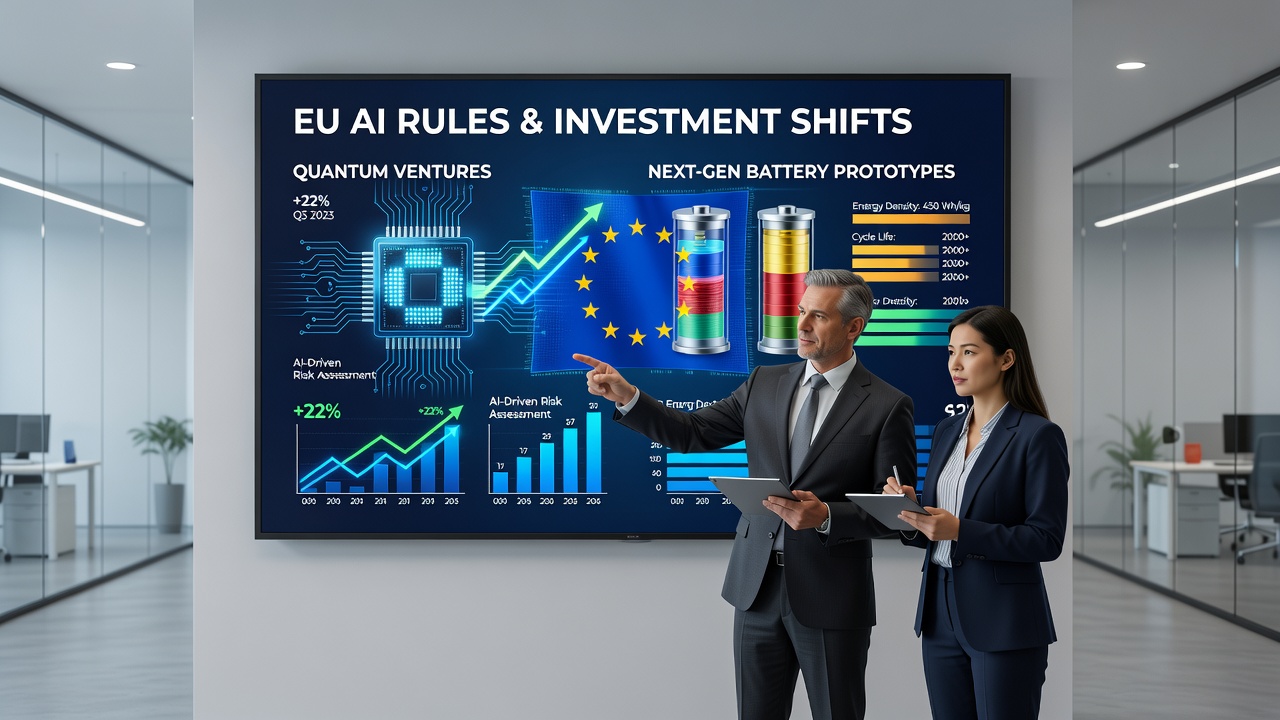
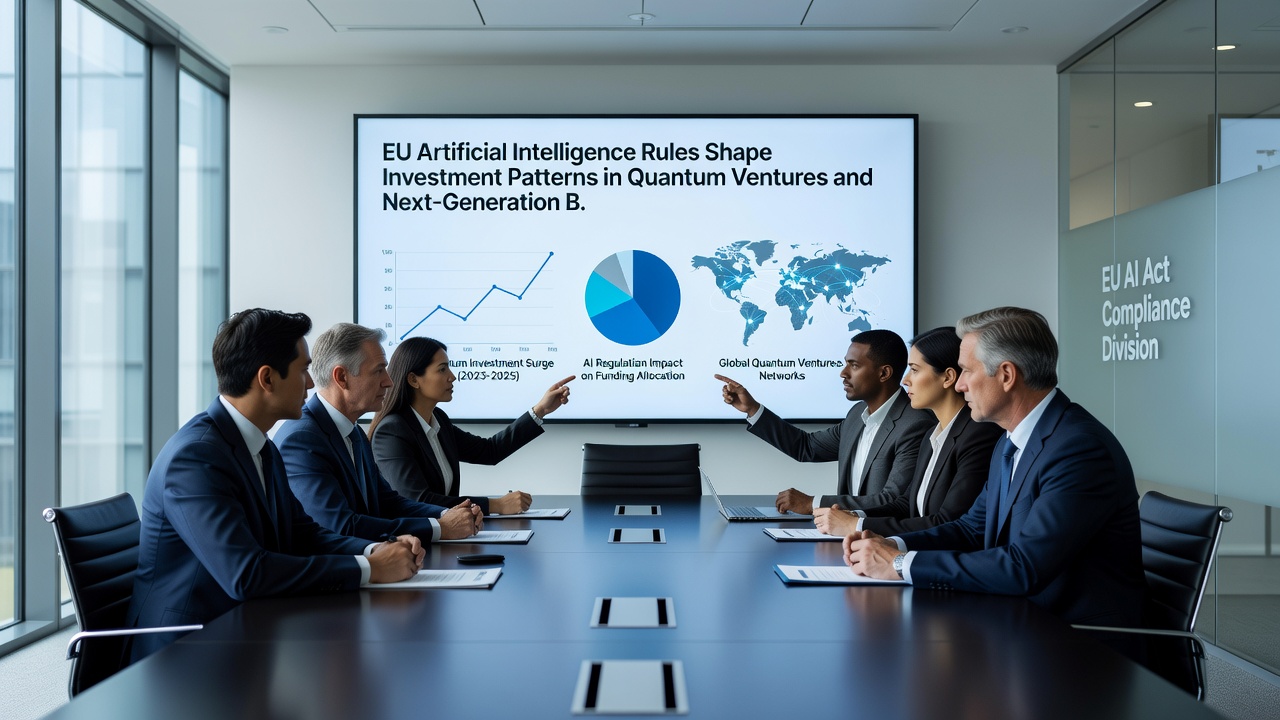
European Union artificial intelligence regulations have begun redirecting capital flows toward quantum computing startups and next-generation battery development projects, with compliance requirements prompting investors to favor ventures that integrate risk-assessment protocols from the outset. The AI Act, which classifies certain systems as high-risk based on their potential societal impact, now intersects with technologies that rely on machine learning for optimization tasks in quantum simulations and battery material modeling.
Data from funding databases shows a measurable uptick in allocations to firms that demonstrate adherence to transparency mandates, particularly those working on prototypes where AI drives predictive analytics for material performance. Observers note that this pattern emerged clearly after phased implementation milestones, as venture groups adjusted due diligence processes to account for potential fines and operational restrictions.
Regulatory Mechanics Driving Capital Allocation
The framework requires providers of high-risk AI applications to conduct conformity assessments, maintain detailed documentation, and ensure human oversight mechanisms remain in place throughout development cycles. Quantum ventures that employ AI for algorithm refinement or error correction fall under scrutiny when those tools influence critical infrastructure decisions, while battery prototype teams using similar systems for electrolyte formulation or degradation forecasting face parallel obligations.
Industry reports indicate that seed and Series A rounds in these sectors increasingly reference AI governance plans as standard annexes to pitch materials. Capital has concentrated around entities already embedding audit trails into their workflows, whereas projects lacking such structures encounter extended review periods from limited partners.
Quantum Sector Adjustments Under Scrutiny
Quantum computing firms have responded by forming dedicated compliance units that map regulatory categories onto their hardware-software stacks. Funding patterns reveal stronger interest in companies whose simulation platforms incorporate explainability features, allowing regulators to trace decision pathways in optimization problems tied to logistics or drug discovery. In November 2026, updated guidance from EU bodies clarified thresholds for quantum-AI hybrid systems, leading several funds to accelerate commitments to European-based teams ahead of stricter reporting deadlines.
One notable shift involves cross-border syndicates that pair EU-headquartered quantum groups with international partners, ensuring that data processing occurs within jurisdictions that satisfy adequacy decisions. This approach has stabilized deal flow despite broader market caution around emerging technologies.
Battery Prototype Funding and Compliance Overlaps
Next-generation battery research, particularly solid-state and lithium-sulfur variants, has seen parallel redirection of resources. Prototypes that leverage AI for real-time monitoring of charge cycles or thermal management now require explicit risk classifications before scaling trials. Research consortia report that grant applications and private investments both prioritize teams capable of producing auditable datasets on model accuracy and failure modes.
European Commission statistics highlight increased participation from battery developers in regulatory sandboxes, where controlled environments test AI components without immediate full-scale obligations. These programs have correlated with higher survival rates for early-stage prototypes seeking follow-on capital.
Geographic and Institutional Patterns
Investment activity has clustered in regions with established quantum hubs and battery testing facilities, such as parts of Germany, France, and the Netherlands. Funds domiciled outside the EU have adapted by establishing local entities to navigate enforcement mechanisms, a tactic that preserves access to deal pipelines while meeting extraterritorial reach provisions in the legislation. According to European Commission updates, cross-regional partnerships have risen notably since the rules took fuller effect.
Additional data from the OECD AI Policy Observatory tracks similar compliance-driven reallocations in comparable regulatory environments, underscoring that EU-specific rules accelerate specialization among quantum and battery innovators.
Conclusion
Overall, the interplay between EU artificial intelligence rules and investment decisions continues to favor quantum and battery initiatives that embed governance structures early. Funding records through late 2026 demonstrate sustained activity in compliant segments, with capital moving away from higher-uncertainty profiles toward those equipped for ongoing regulatory alignment. This evolution reflects structural responses to a maturing oversight regime rather than temporary market fluctuations.