Lars Reed · 21 October 2026
Polar Monitoring Data Reshapes Strategies for Sourcing Materials in Advanced Computing Hardware Production
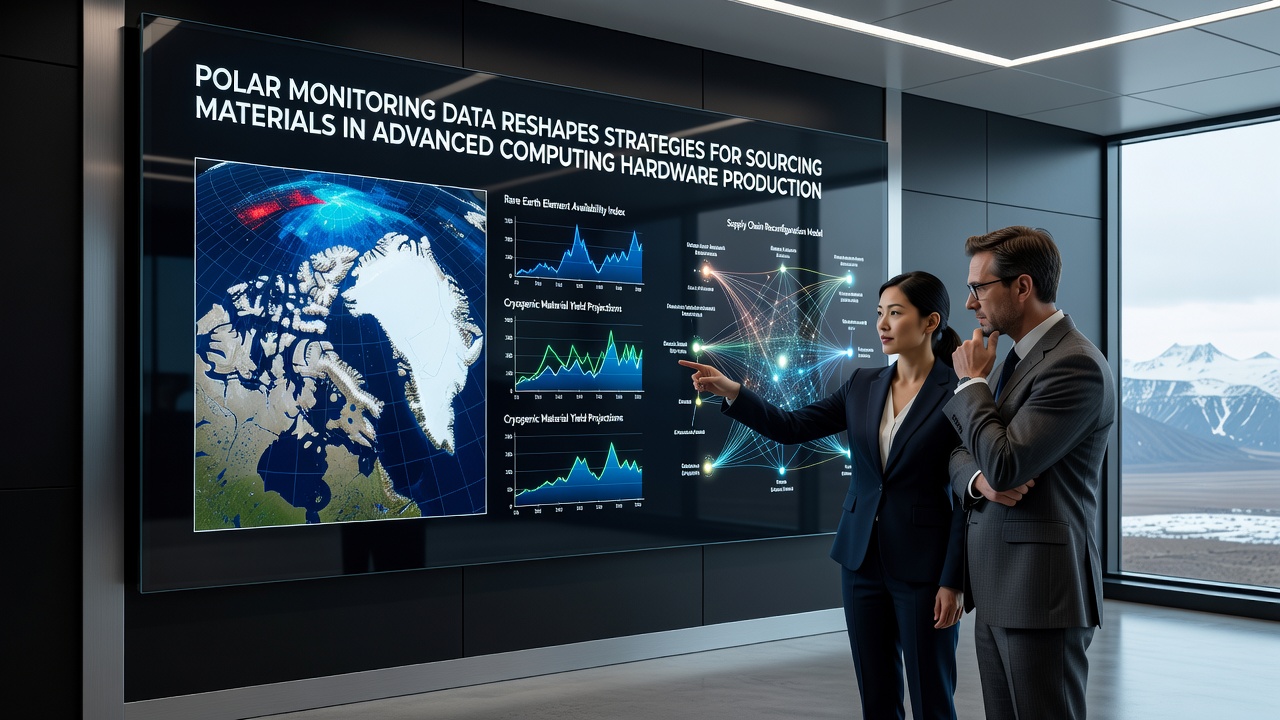
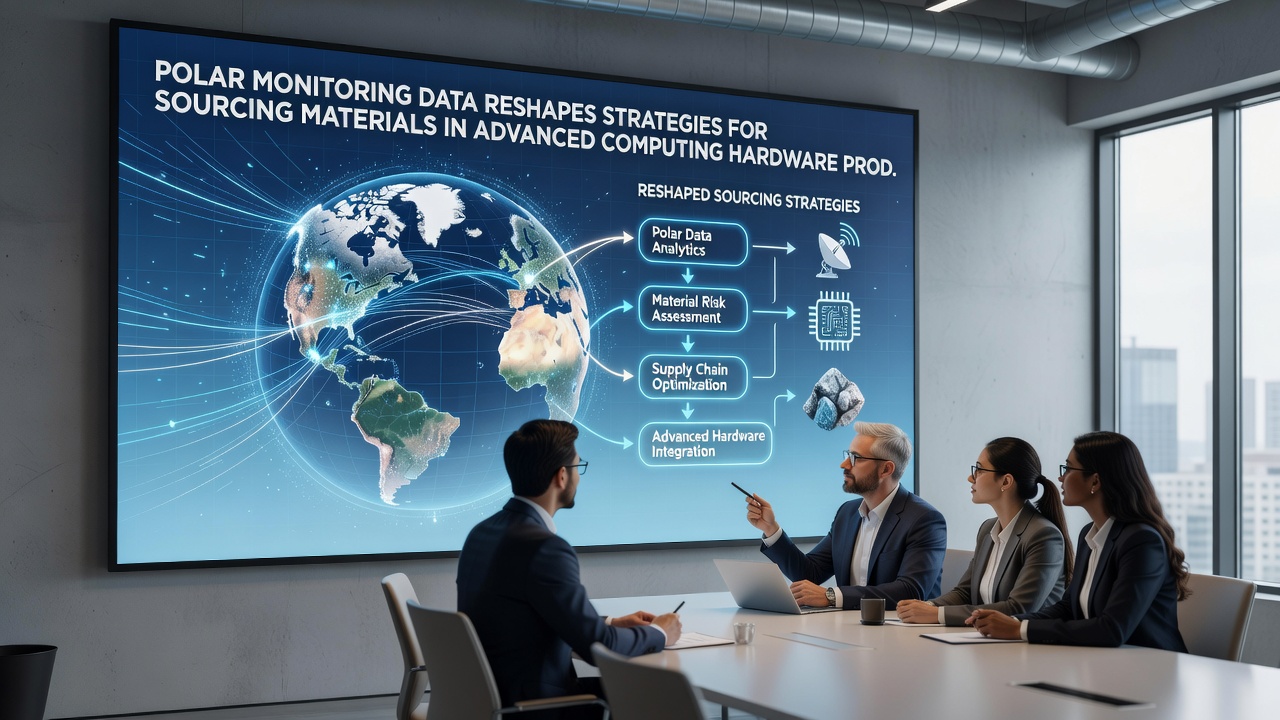
Advanced computing hardware production depends on stable supplies of specialized minerals and metals, many of which travel through or originate near polar regions, and recent polar monitoring datasets have begun to alter how companies plan their sourcing networks. Continuous satellite observations combined with ground sensor networks track ice coverage, permafrost stability, and ocean current shifts that affect both extraction sites and transit corridors used by suppliers of silicon, rare earth elements, and lithium compounds essential for semiconductors and memory components.
Data Collection Networks Expand Coverage
Organizations operating in the Arctic and Antarctic have increased the density of monitoring stations since 2024, with new arrays deployed in October 2026 providing higher-resolution readings on seasonal ice thickness and coastal erosion rates. These readings feed directly into logistics models that hardware manufacturers use to forecast delivery windows for raw materials arriving via northern sea routes or southern transoceanic paths. When monitoring shows accelerated permafrost thaw along proposed mining access roads in northern Canada, procurement teams adjust contracts to favor alternative sources in Australia or South America rather than risk delays during spring thaw periods.
Supply Chain Adjustments Follow Environmental Readings
Manufacturers of advanced processors now integrate polar datasets into their enterprise resource planning systems alongside traditional market indicators. A shift in prevailing currents detected near the Bering Strait in late 2025 prompted several firms to reroute shipments of gallium and germanium compounds away from potential ice blockage zones, resulting in revised inventory buffers and diversified supplier agreements. Data from the European Environment Agency shows that ice extent variability in the Barents Sea has influenced at least three documented changes to bulk carrier schedules serving European chip fabrication plants during the 2025-2026 season.
Regional Examples Highlight Practical Changes
One mining operation in northern Sweden adjusted its extraction schedule after permafrost monitoring indicated increased ground instability during summer months, leading hardware companies that purchase its output to secure parallel contracts with Chilean suppliers. Similar adjustments occurred when Antarctic monitoring data revealed changes in krill population patterns that indirectly affect regulations governing certain mineral exploration permits near the continent. Companies have responded by extending qualification periods for new material batches and maintaining larger safety stocks of critical dopants used in wafer fabrication.
Industry Collaboration on Data Standards
Trade associations representing semiconductor equipment makers have begun working with polar research institutes to standardize data formats so that monitoring outputs integrate more easily with existing risk assessment platforms. Meetings held in October 2026 focused on aligning measurement protocols for sea ice pressure and coastal sediment movement with the specifications required by global logistics software used by chip producers. These efforts aim to reduce the time between data collection and operational decision making from weeks to days.
Longer Term Planning Incorporates Multiple Variables
Material sourcing strategies now account for projected changes in polar conditions over five to ten year horizons rather than relying solely on historical averages. Projections derived from ongoing monitoring indicate that certain northern extraction sites may face extended operational windows during winter months while others encounter restrictions due to shifting wildlife protection zones. Hardware manufacturers have therefore increased the frequency of supplier audits and incorporated contingency clauses that trigger automatic diversification when specific environmental thresholds are crossed.
Conclusion
Polar monitoring continues to supply granular information that directly informs procurement timelines, route selections, and supplier diversification decisions within the advanced computing hardware sector. As datasets accumulate through 2026 and beyond, companies maintain active integration of these environmental signals into their operational frameworks to manage material availability risks.